Taking a course?
Preparing for an exam?
Brushing up before a state or designation exam?
Practice problems with the working shown — step-by-step solutions, HP-12c keystrokes, exhibits, and study tools. Built by a practicing appraiser who teaches these courses.
What the Toolbox is
A large set of appraisal practice problems that generate fresh numbers every time you open them, each one worked through in full.
Most appraisal study material has two gaps.
The first is between the problem and the answer. You are given both, and the route between them is where people get stuck. Every problem here shows that route: what you were given, which method applies, the arithmetic in order, and the calculator keystrokes that get you there.
The second is that it is one problem with one answer. Work it twice and you are working the same numbers, and the second time you are remembering rather than solving. Every problem here draws fresh figures each time you open it — the data changes, the wording moves, the answer is different. You end up learning how to solve the problem rather than what the answer was.
It was built by one person — a practicing appraiser who teaches these courses — and it is maintained continuously. It exists because the same questions come up in every class, and a worked example beats an explanation.
What it is not
- Not developed, approved, or endorsed by any appraisal organization, association, or course provider.
- Not part of any course, and not a substitute for course material.
- Not required, and not a shortcut. It is practice.
What is inside a problem
Every problem draws new numbers each time, so you can work the same method until it sticks rather than memorizing one answer.
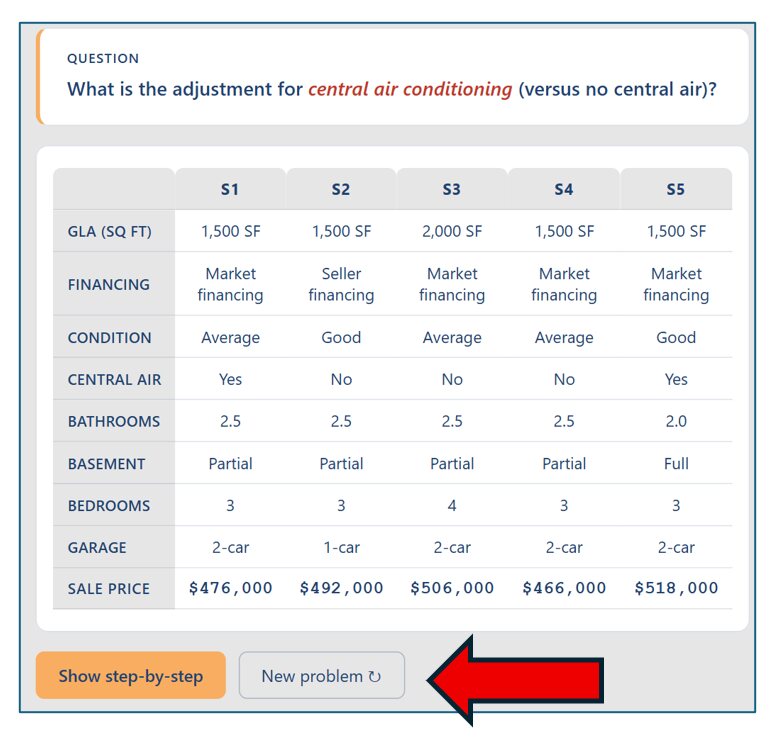
A fresh problem, every time
Press New problem and the figures change. The method stays; the arithmetic does not.
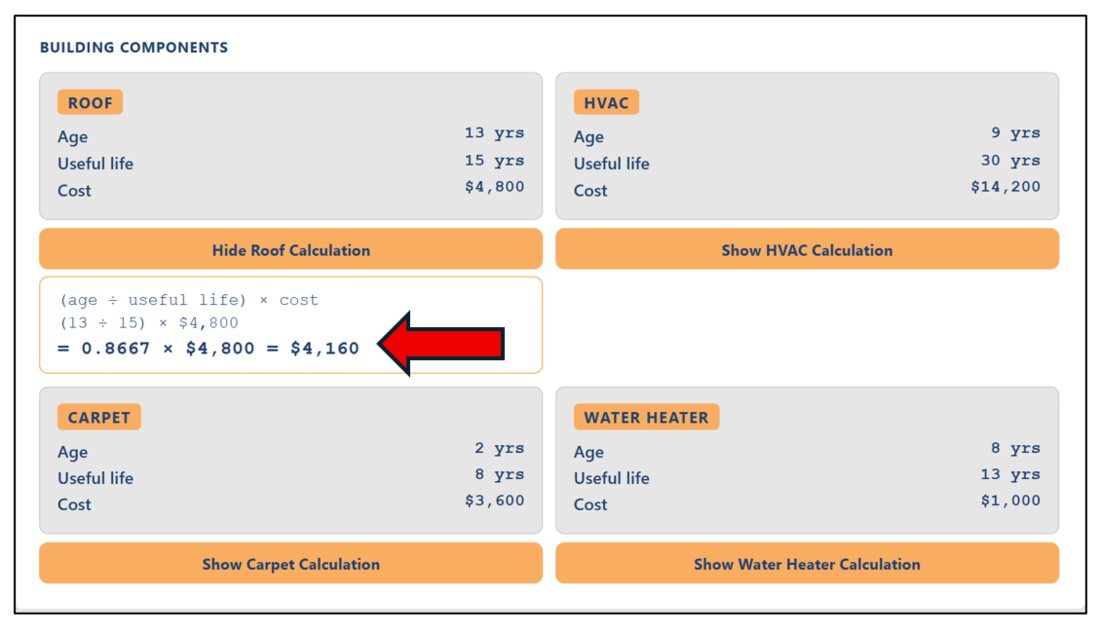
The worked solution
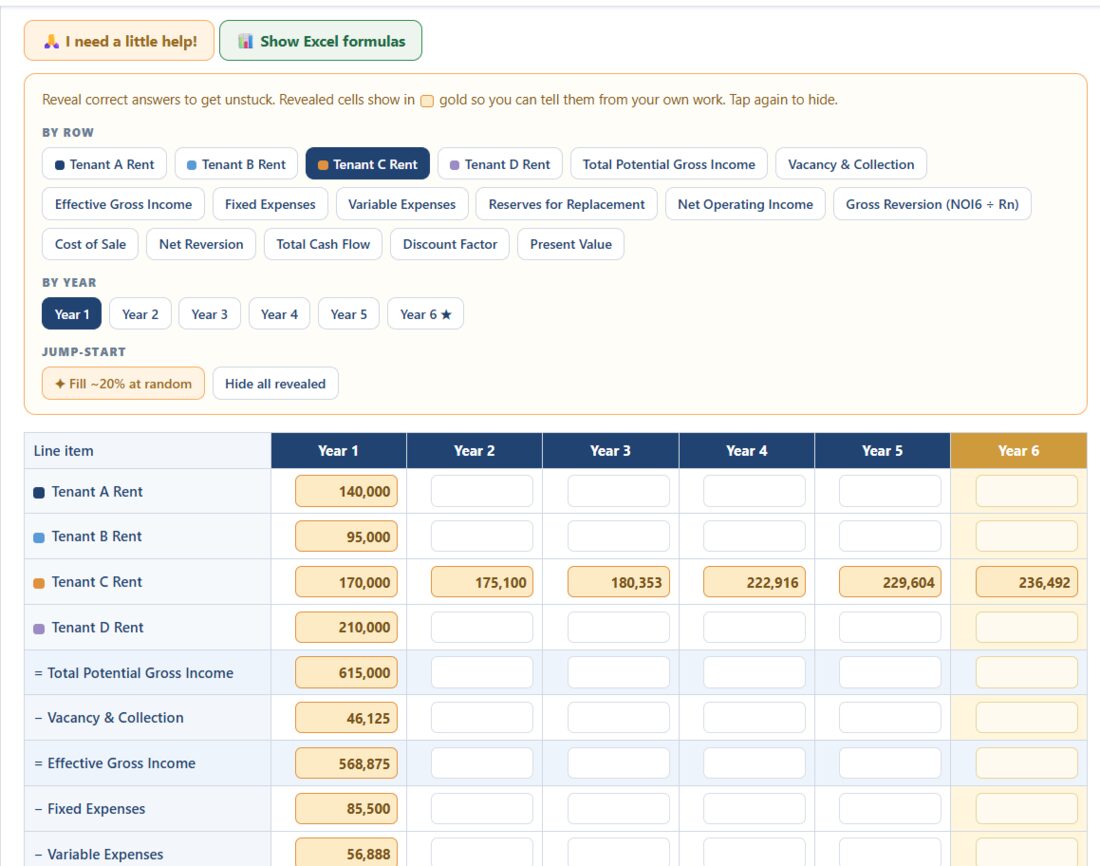
Step by step, in order, with each figure shown as it is calculated — not just the answer.
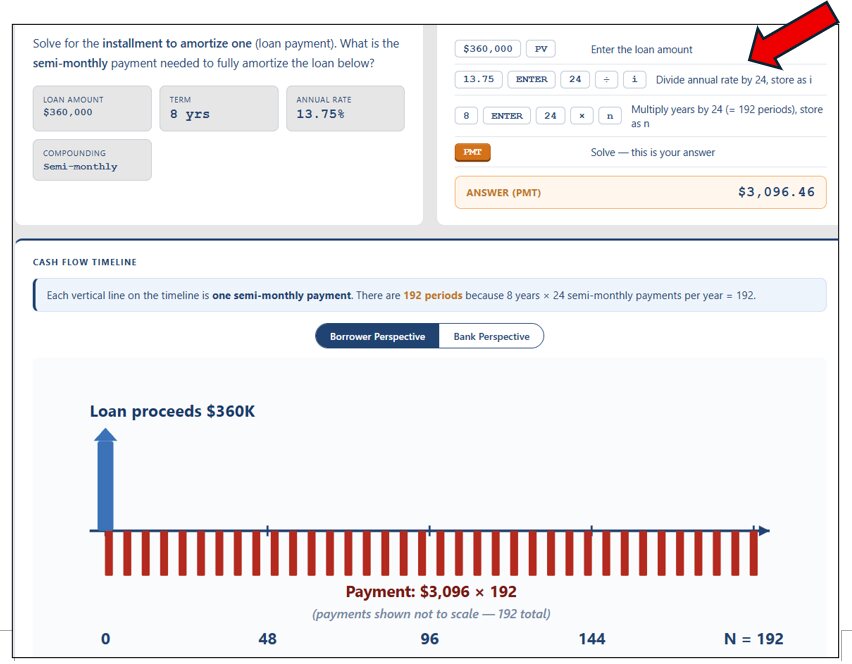
HP-12c keystrokes
The actual keys, in sequence, for every step that uses the calculator.
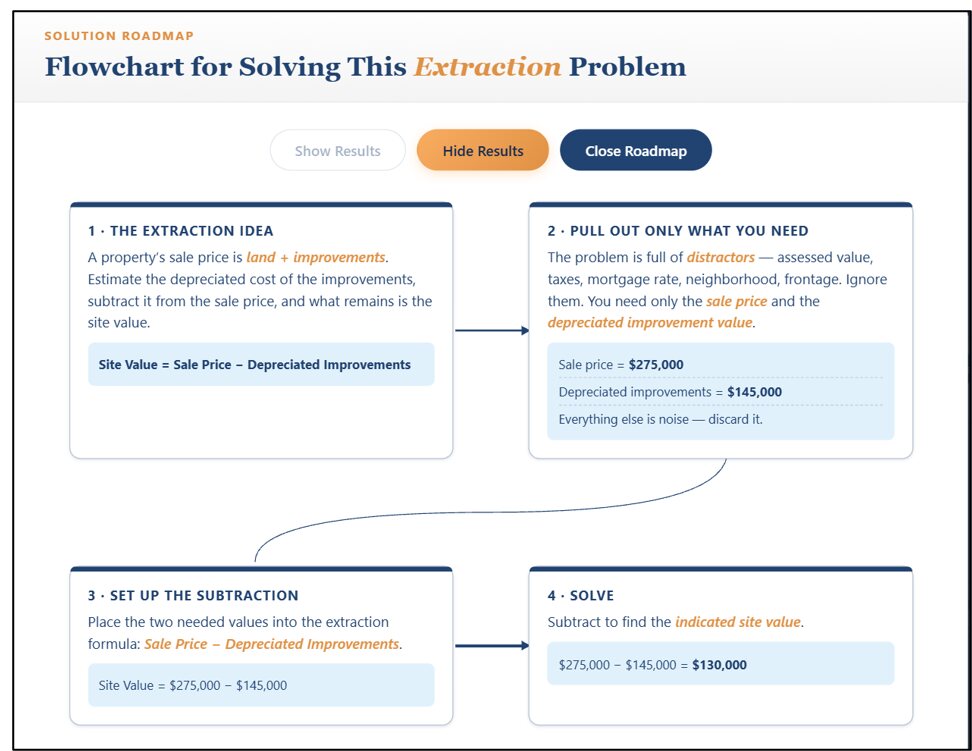
A flowchart
Four boxes showing the route through the problem, with your own numbers in them.
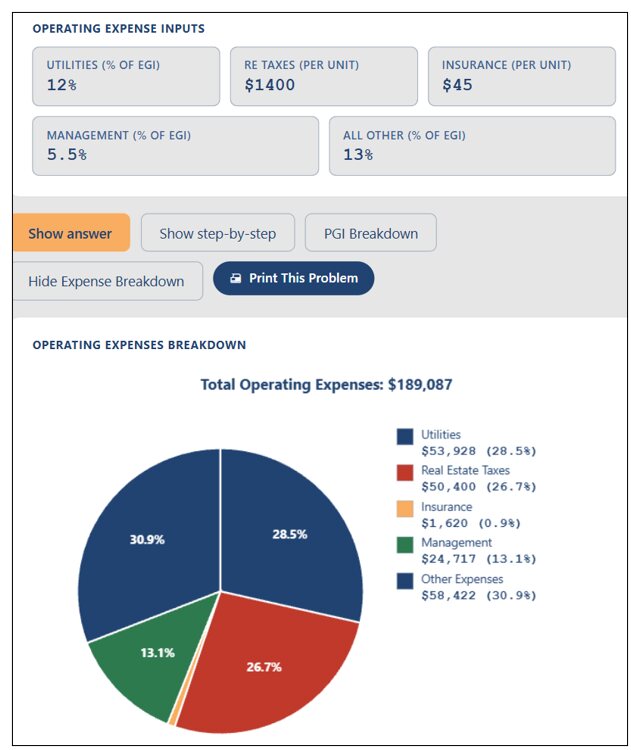
Exhibits and charts
Where a diagram makes the relationship clearer than a paragraph.
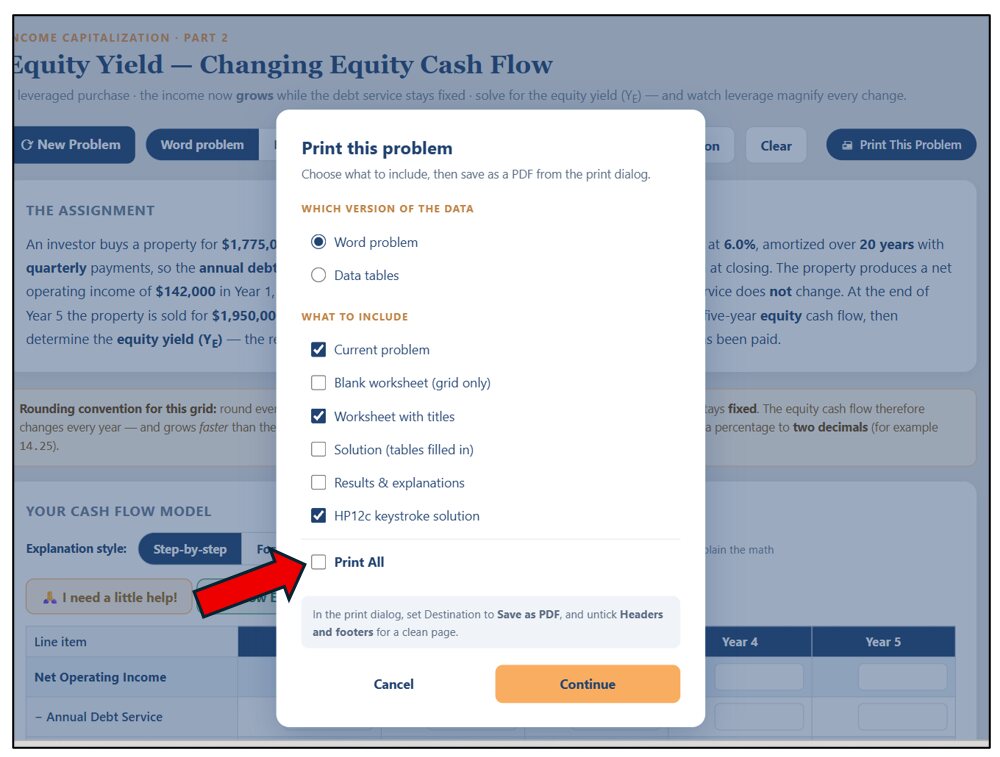
Print it
Any problem prints as a clean worksheet, with or without the solution.
Predict before you solve
Many problems ask you to say which way the answer will go before you work it — will the rate land above or below the yield, is the change positive or negative. Getting that wrong before you start is more useful than getting the arithmetic wrong at the end.
Sample problems
Six problems are open to anyone. No code, no sign-in — work them as they are.
They are ordinary problems from the course files, not demonstrations. Press New problem, reveal the solution, open the flowchart, look at the keystrokes.
The samples are the same build as everything else. If they are useful, the rest will be; if they are not, they are not.
Course files
Practice files are organized by course, and within a course by topic.
| Course | What it covers |
|---|---|
| Basic Appraisal Principles | Value, the approaches, economic principles, property rights |
| Basic Appraisal Procedures | The appraisal process, measurement, describing improvements |
| Cost Approach | Depreciation, site value, cost new, extraction |
| Sales Comparison | Adjustments, paired sales, cash equivalency, bracketing |
| Income Capitalization I | NOI, cap rates, band of investment, Ellwood, reversions |
| Income Capitalization II | DCF, yields, mortgage and equity positions, divided interests |
| Advanced Income Capitalization | Wraparounds, participations, taxation, complex financing |
| Statistics | Measures, distributions, regression |
| HP-12c | Six functions, programming, cash flows |
| USPAP | Standards and practice |
| Market Analysis | Highest and best use, market studies |
Course files open with a code for the course you are taking. The sample problems above are open to everyone.
DCF our way
Six positions, each with its own set of problems — and you decide how hard they are.
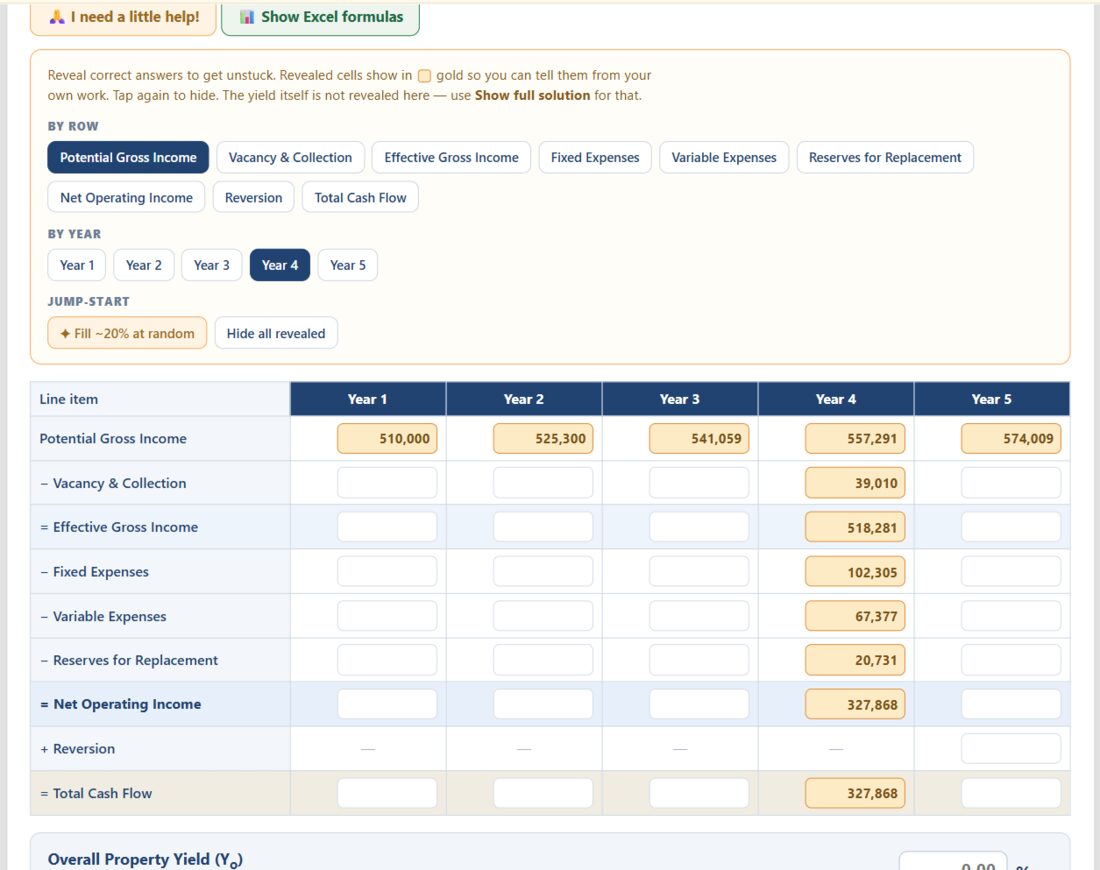
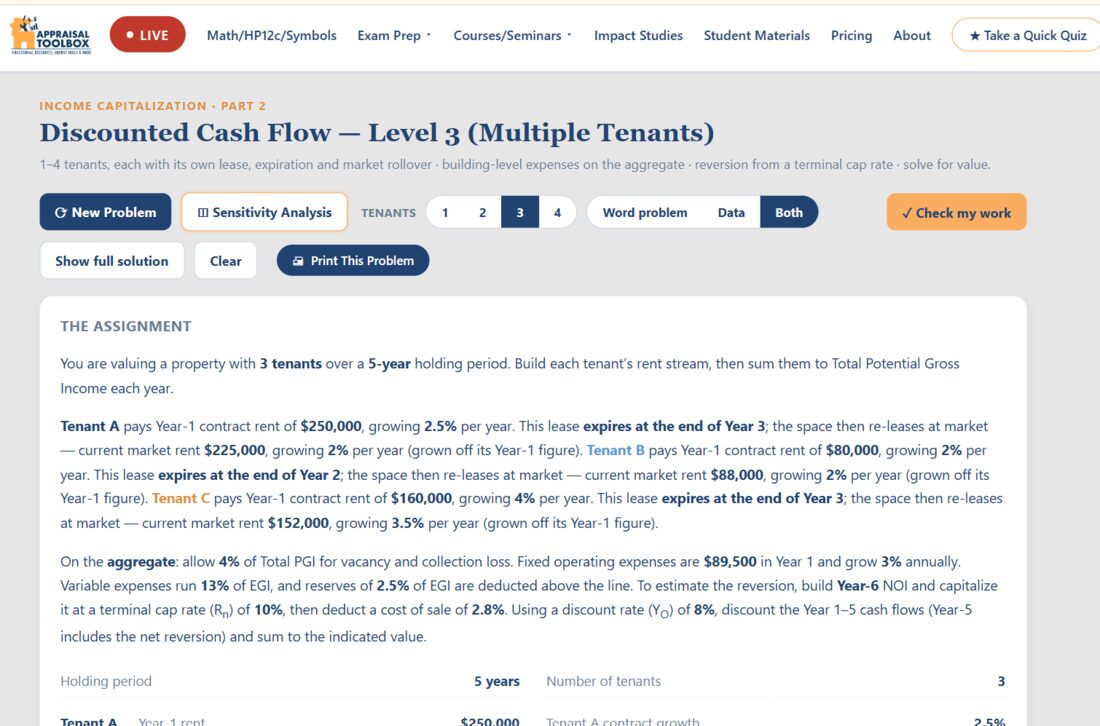
A discounted cash flow is one method applied to six different questions. Most material shows you one worked example of one of them. Here each has its own pages, at the difficulty you choose.
Property Value
The whole property — income, reversion, and the yield the market wants.
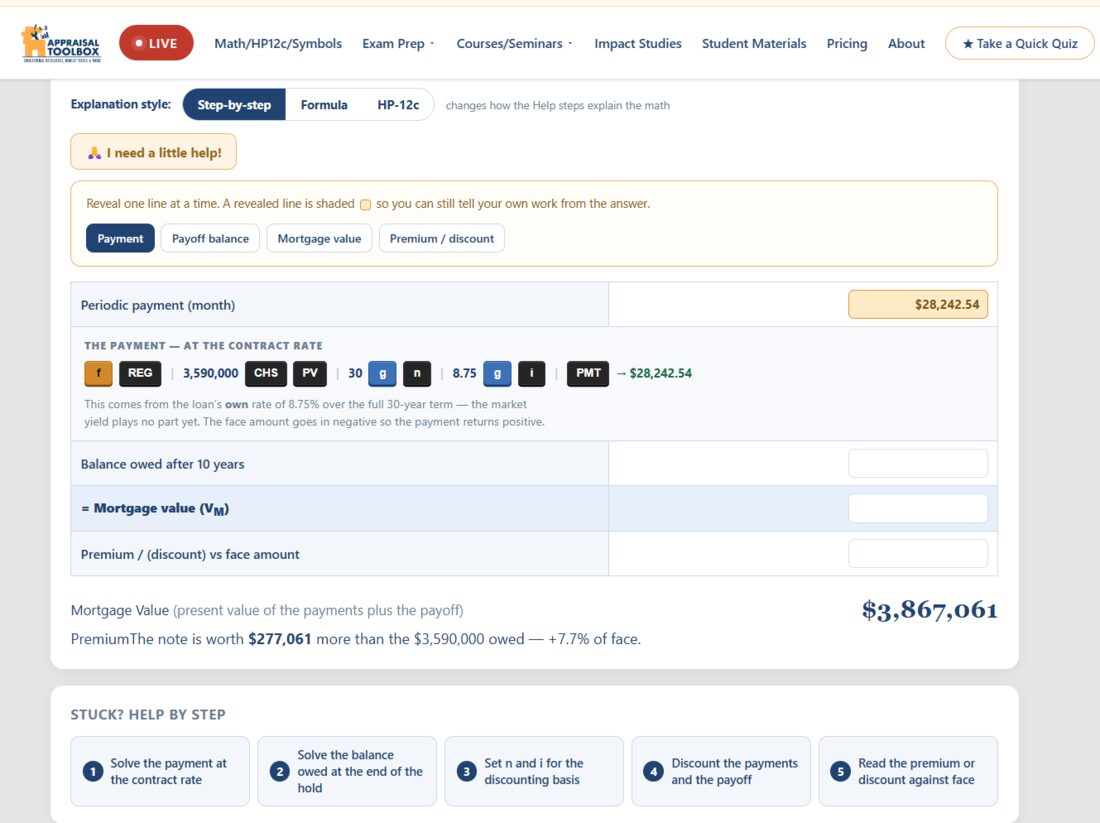
Mortgage Value
The lender’s position: payments plus a payoff, discounted at the market’s mortgage yield.
Equity Value
What the equity actually receives after debt service, and what the equity keeps at sale.
Property Yield Rate
Price and cash flows known, the rate is not. What the property actually earns.
Mortgage Yield Rate
Advance the money, collect the payments, take the payoff — and see what the lender earned.
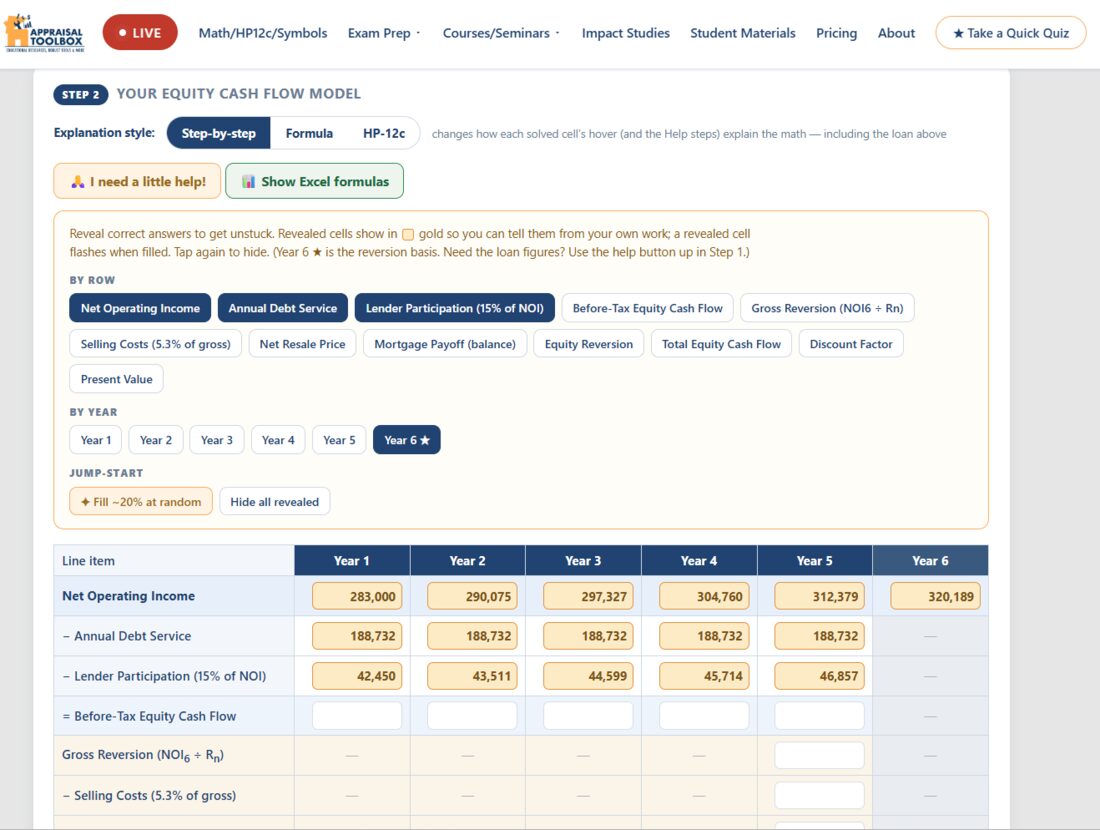
Equity Yield Rate
The leveraged return, and how far leverage magnifies every movement.
What makes them ours
You choose the difficulty
Simple and advanced levels for every position. On the multi-tenant problems you choose how many tenants, each with its own lease, expiry and rollover. Start where you are and move up when it stops being hard.
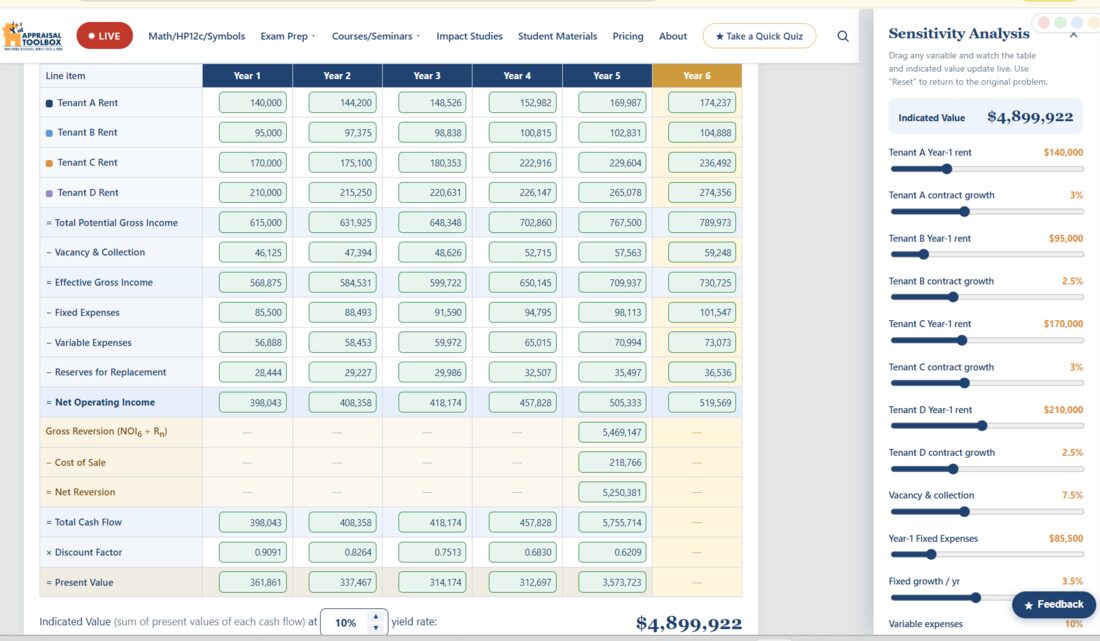
Sensitivity sliders on every input
Move a rate, a term, a rent, a vacancy factor — and watch the answer move with it. See what actually changes value, and by how much. The same for the yield rate: some inputs barely move it and some dominate it, and reading about that is not the same as watching it happen.
Fresh numbers every time
Every problem redraws. Work a position until the method is yours, not until you have memorized one answer.
The working, in whichever form helps
The step-by-step reasoning, the HP-12c keystrokes, and the arithmetic laid out — for the same problem, so you can see how the three line up.
Study tools
Reference material that sits outside any one course, open to anyone.
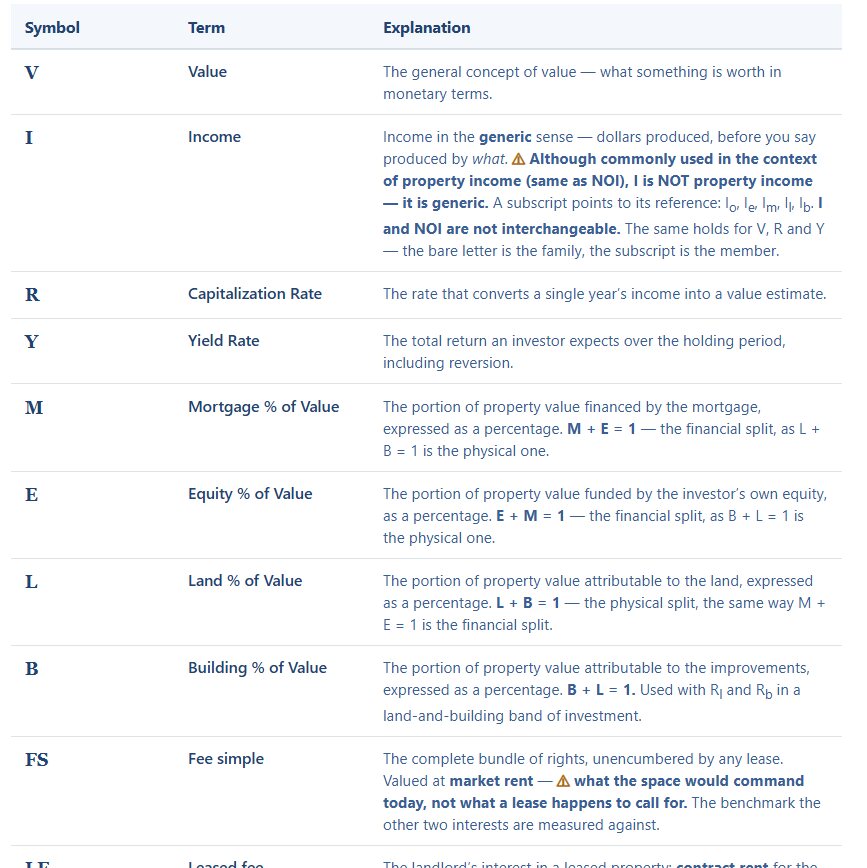
Symbols list
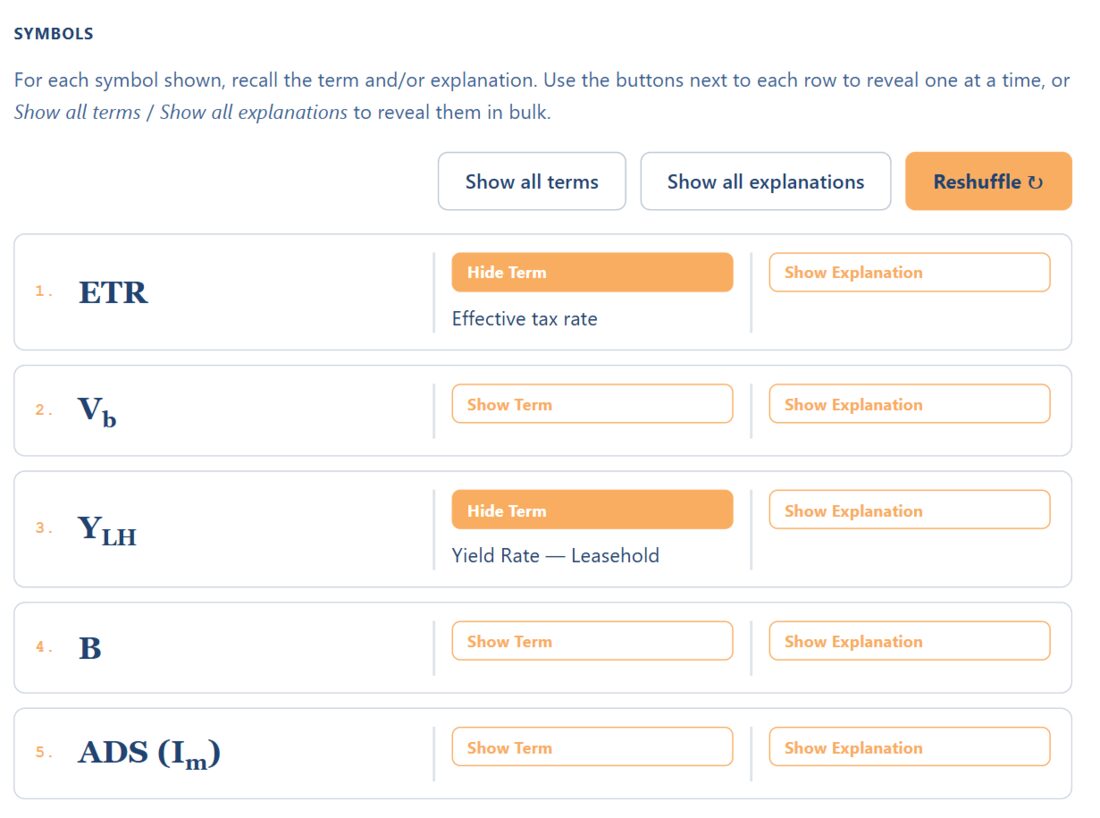
Every symbol the standard texts use without explaining — with its term, a plain-English note, and what people commonly get wrong. Sortable, and drillable as flashcards.
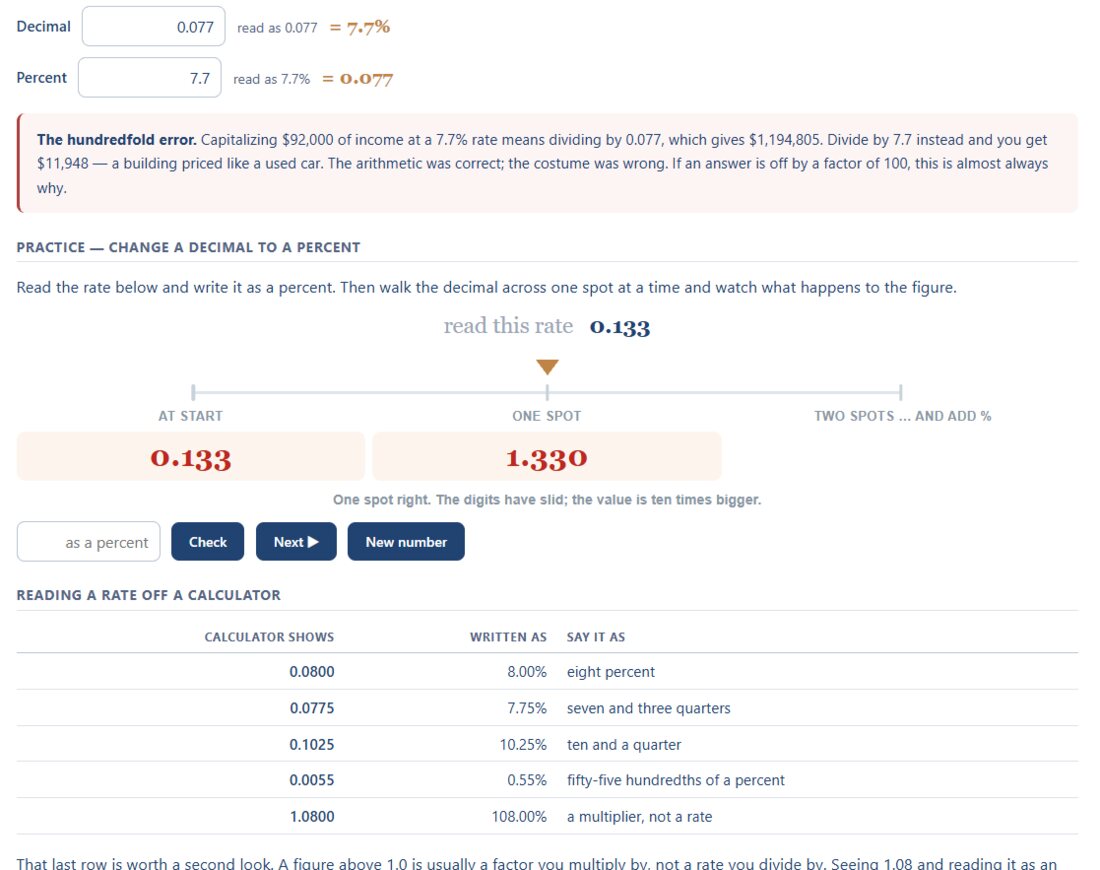
Math basics
The arithmetic the courses assume you already have.
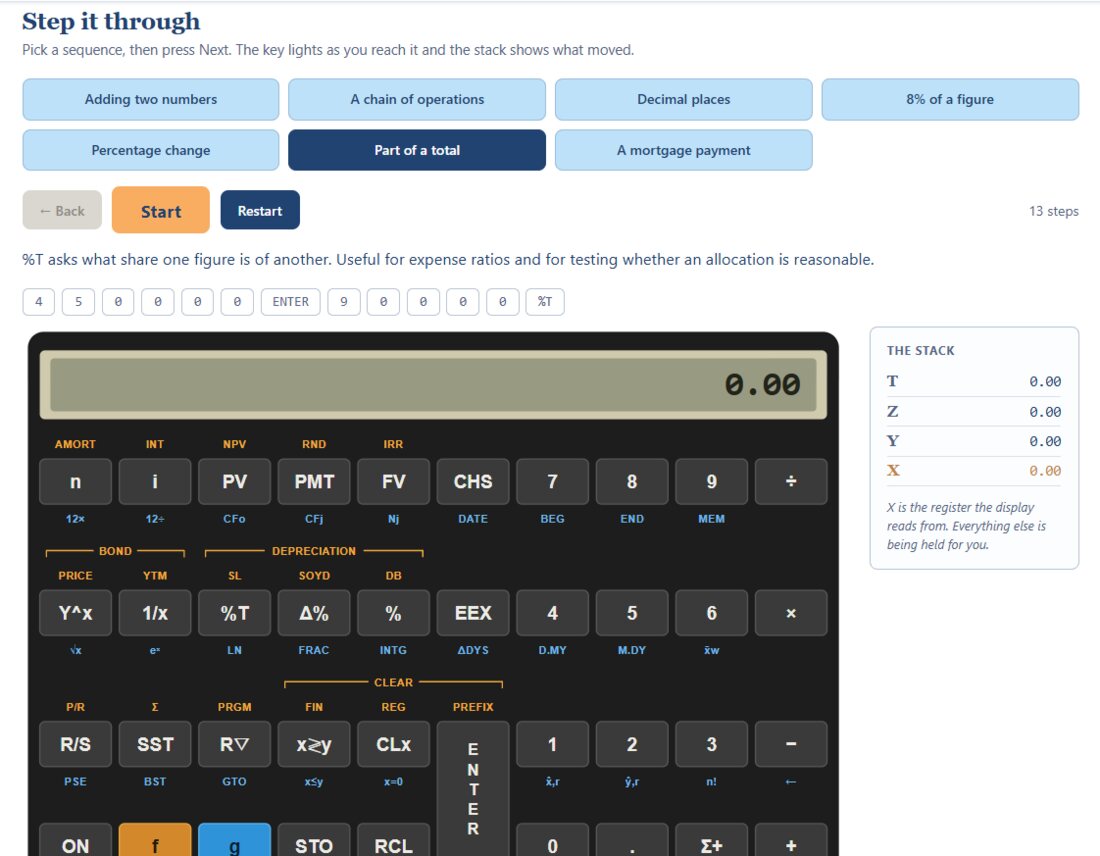
HP-12c help
Setup, the keys that matter, and the sequences that come up repeatedly.
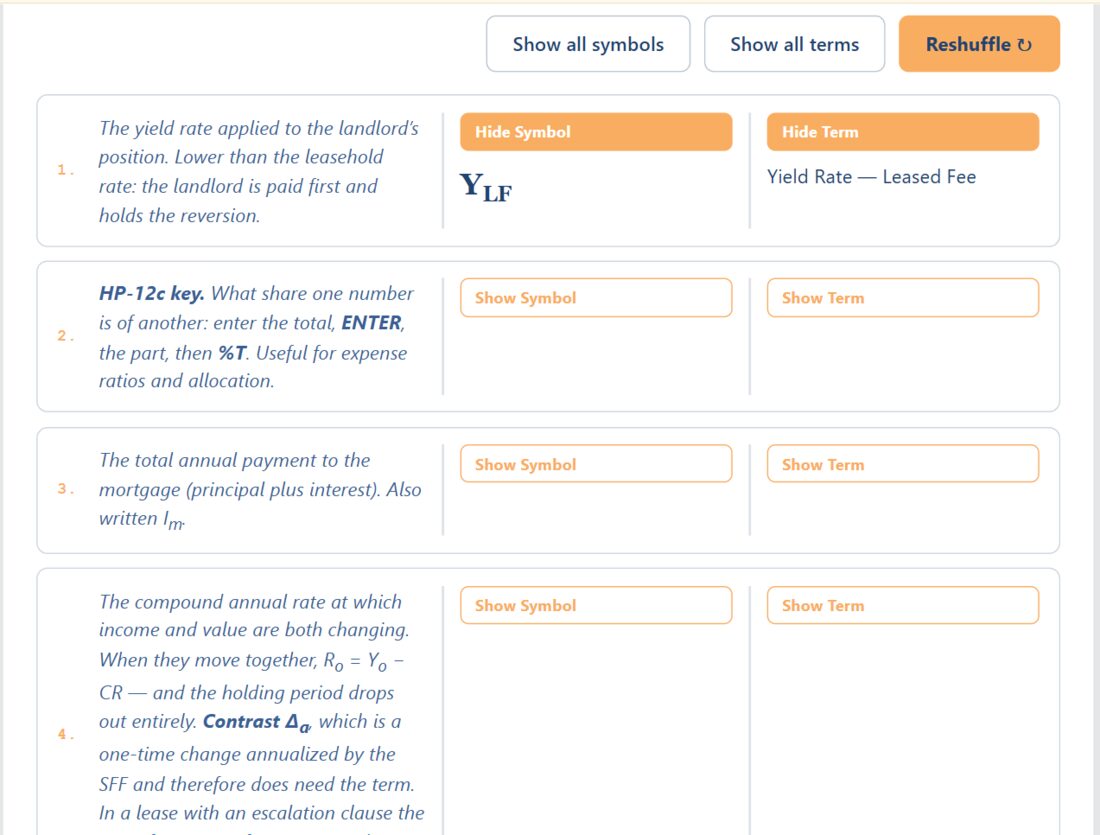
Quick Quiz — Concepts
Given the explanation, recall the symbol and the term. Reveal either side, one at a time or all at once.
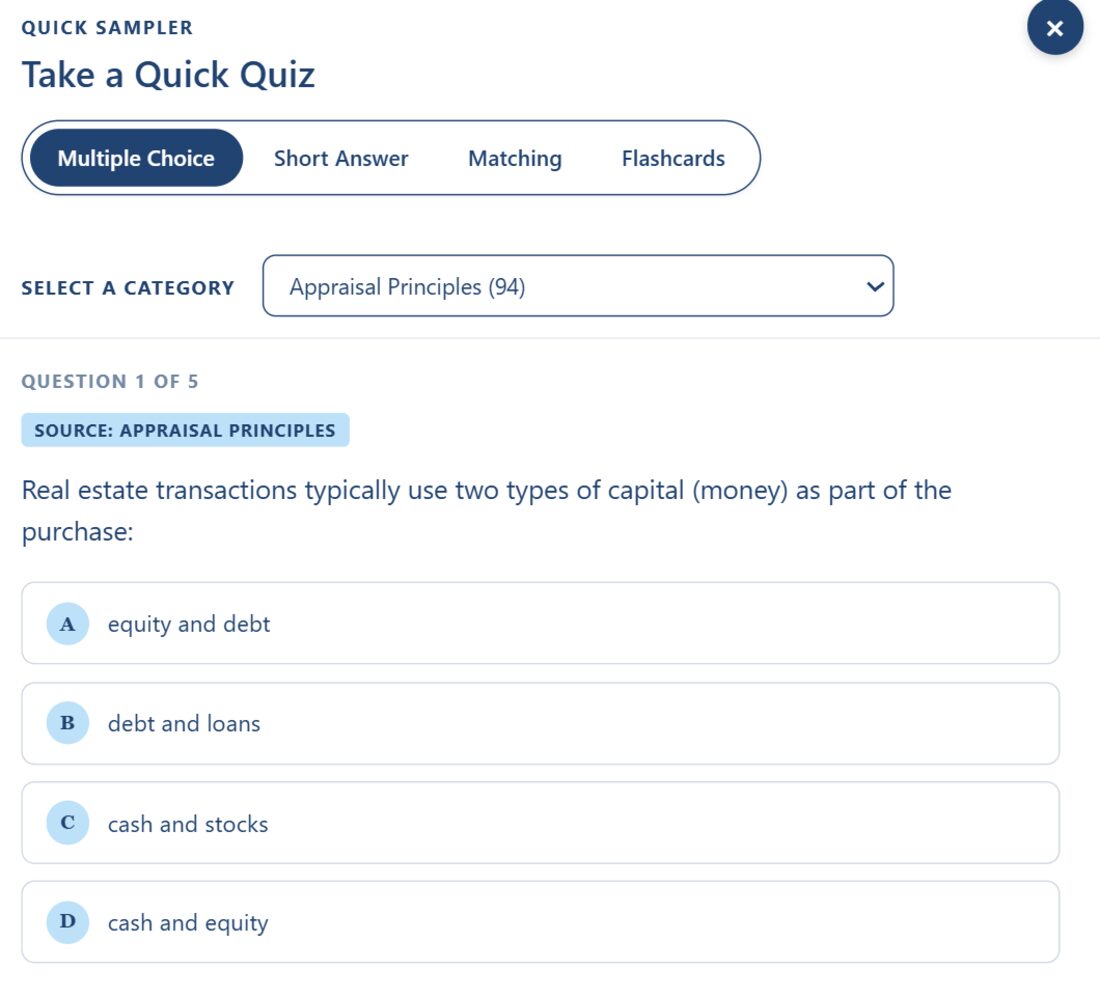
Quick Quiz — Multiple Choice
Five questions at a time, drawn from a category you pick. Appraisal Principles, Procedures, Income, and more.
Quick Quiz — Symbols
Given the symbol, recall the term and the explanation. Short answer, matching and flashcards too.
Open the study tools — no code needed.
My Stuff
A scratchpad that follows you around the site while you study.
As you work, you can add things to My Stuff: a definition you want to come back to, an explanation that finally made something land, a link to a problem you want to work again, or a note to yourself.
- It is there on every page, and the count goes up as you add.
- You can write your own notes into it — “ask about split rates on Thursday”.
- You can download the whole thing at any time.
My Stuff is a scratchpad, not storage. It is cleared when your course ends, along with your access. It is not a record-keeping system and not a backup.
Download anything you want to keep, before your course ends. Once it is cleared there is no recovery and no archive.
The Toolbox Library
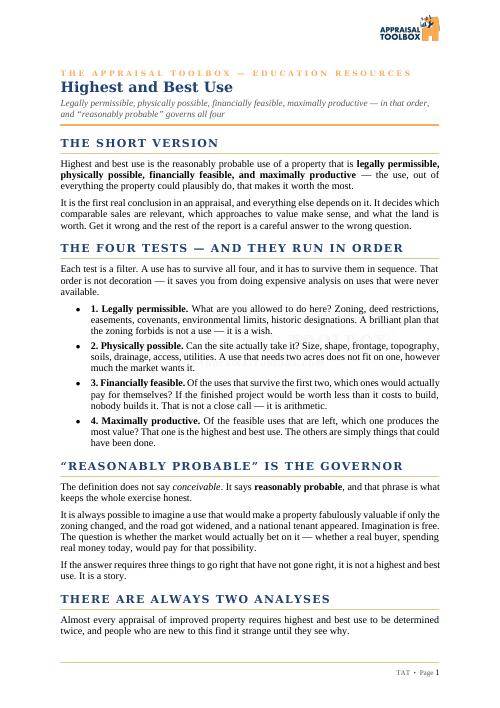
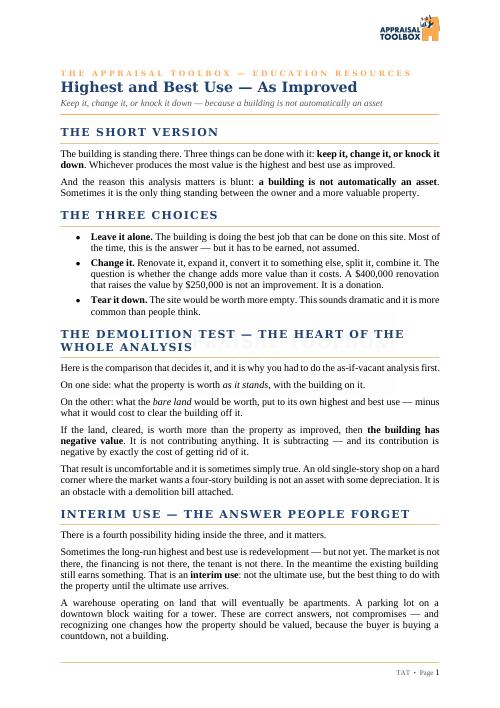
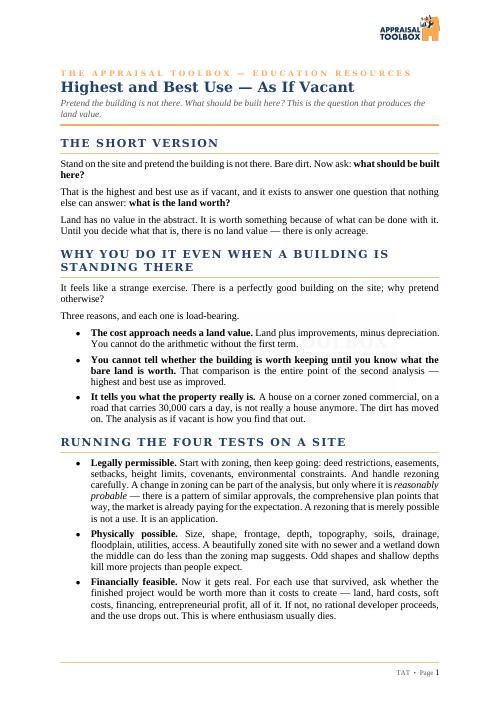
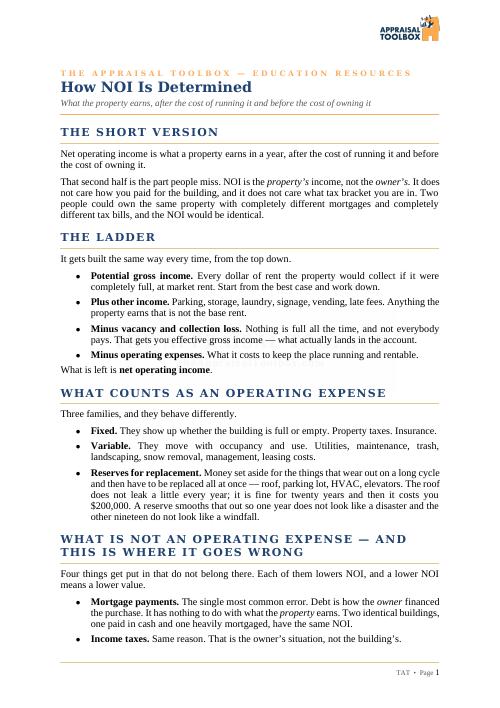
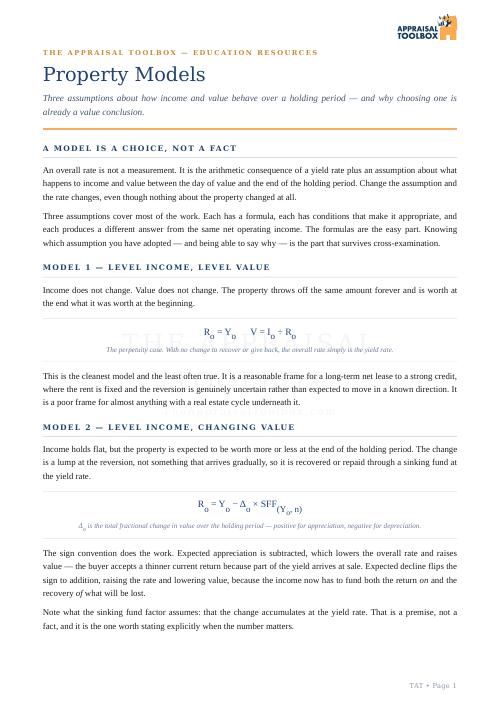
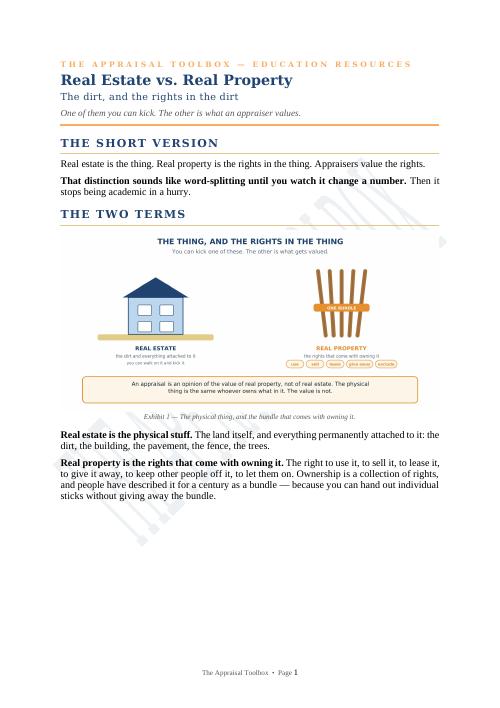
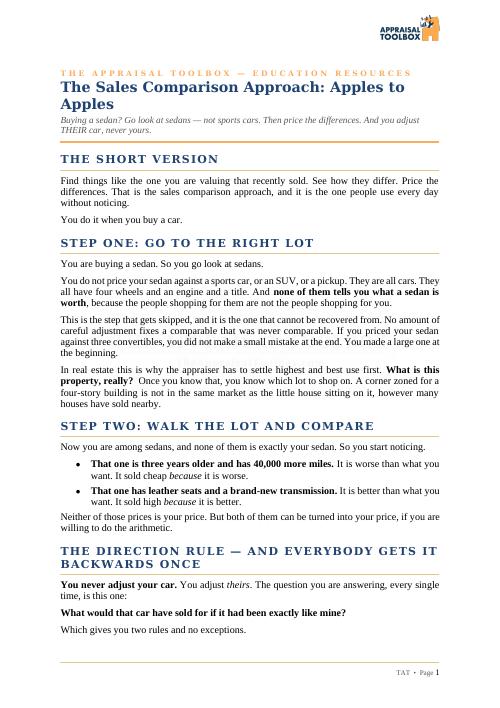
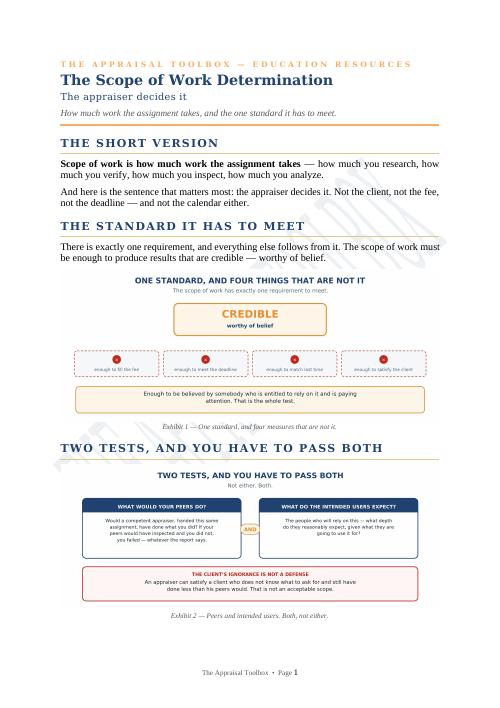
Written papers on the topics that take more than a worked problem to explain.
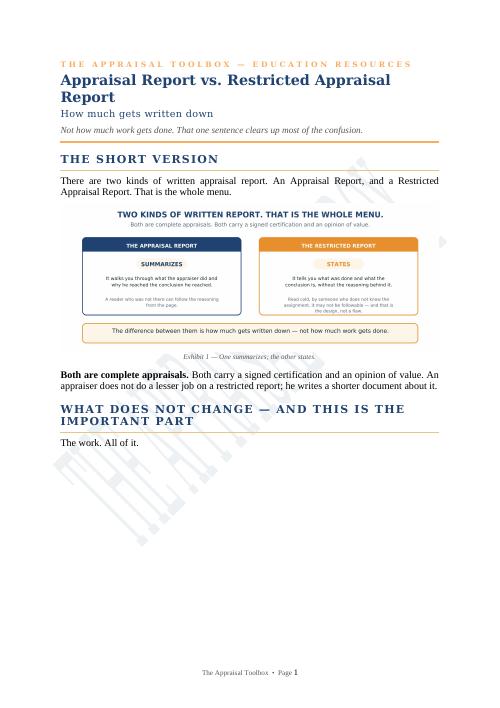
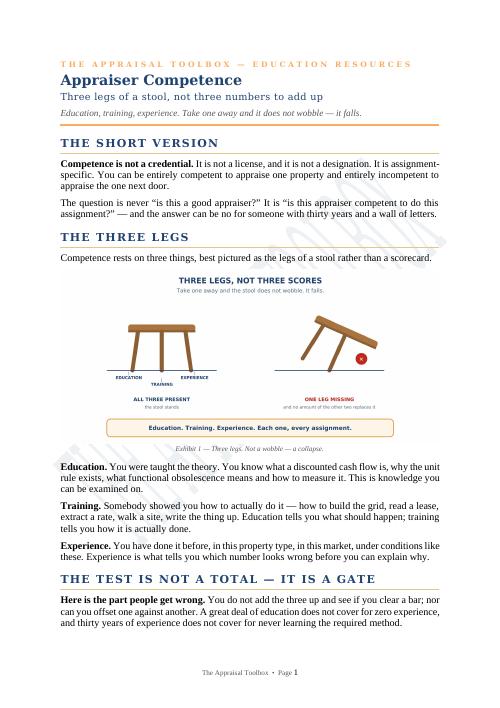
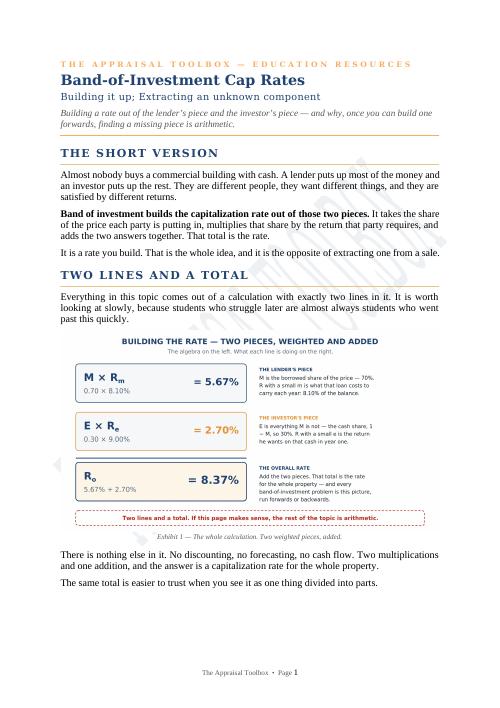
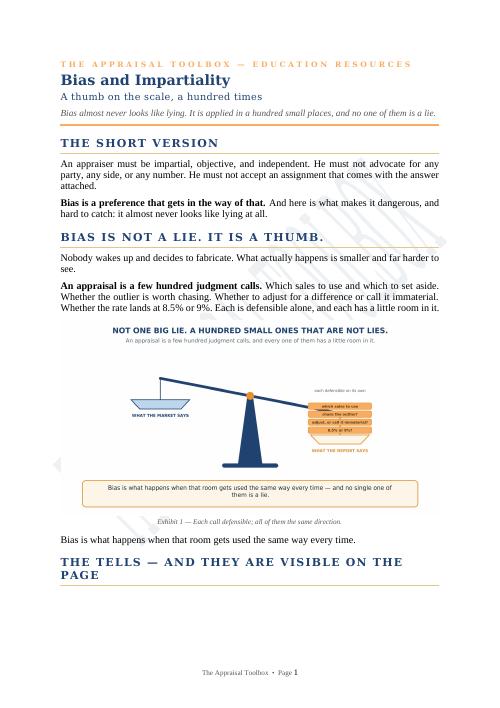
Some things do not fit inside a problem. When a concept needs several pages — the reasoning, the exceptions, the way it shows up in practice — it becomes a paper in the Toolbox Library, and the problems that touch on it link across to it.
The papers are written the same way the problems are: worked through, with the arithmetic shown and the calculator keystrokes where they apply.
The papers
41 papers, and the list grows. Five are open to anyone — the rest open for students with course access.
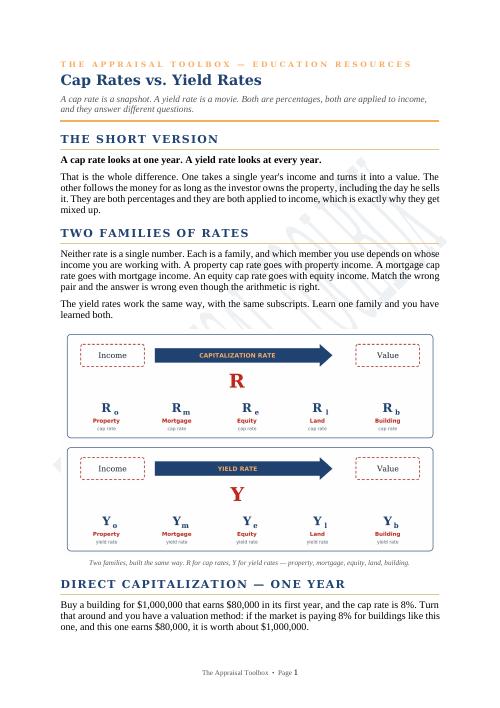
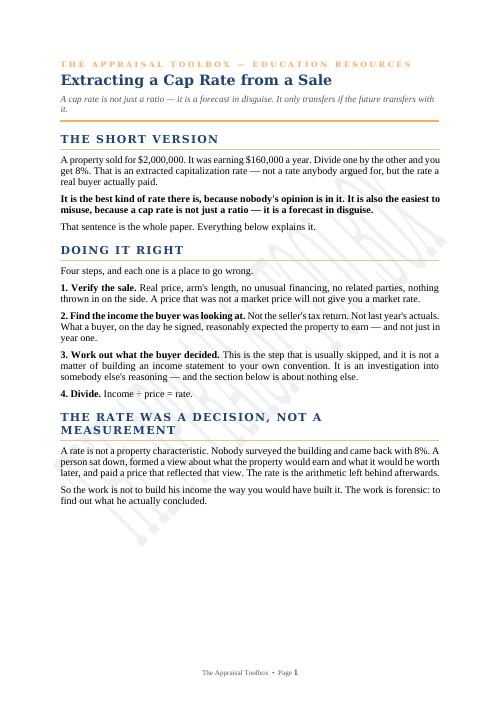
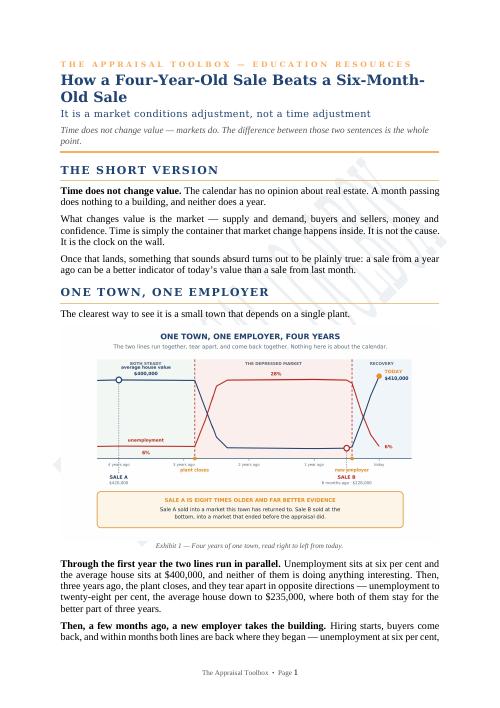
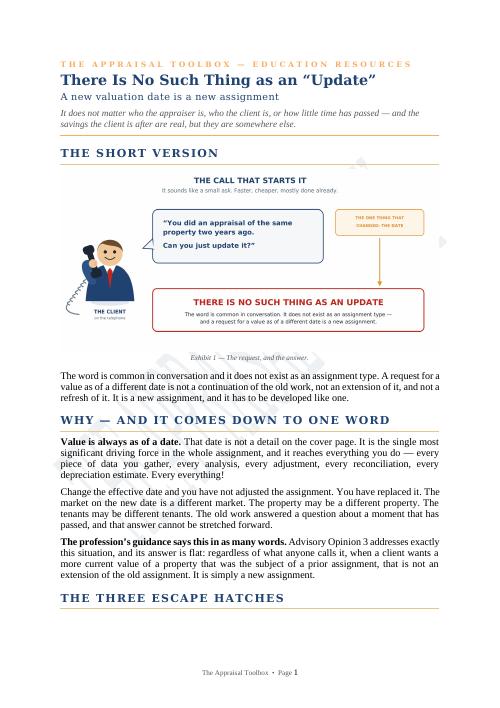
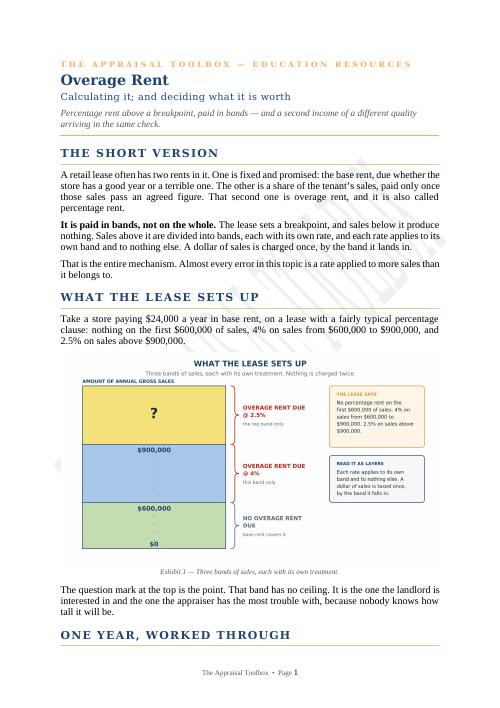
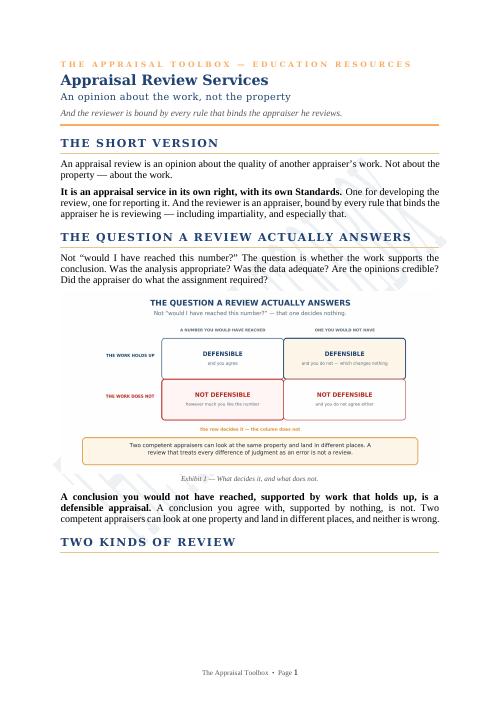
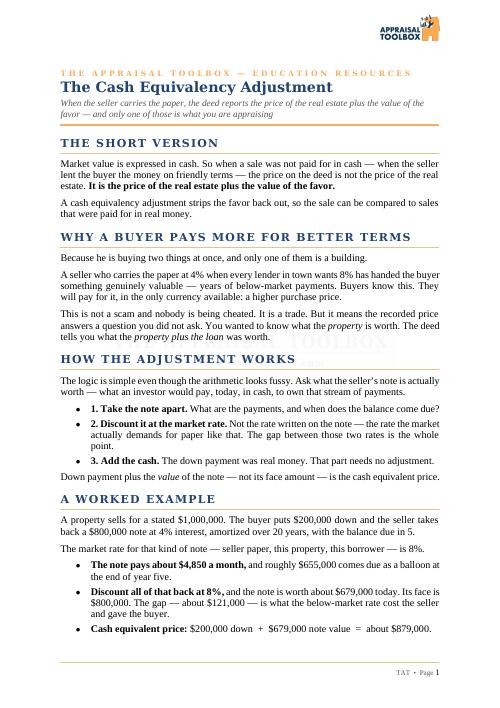
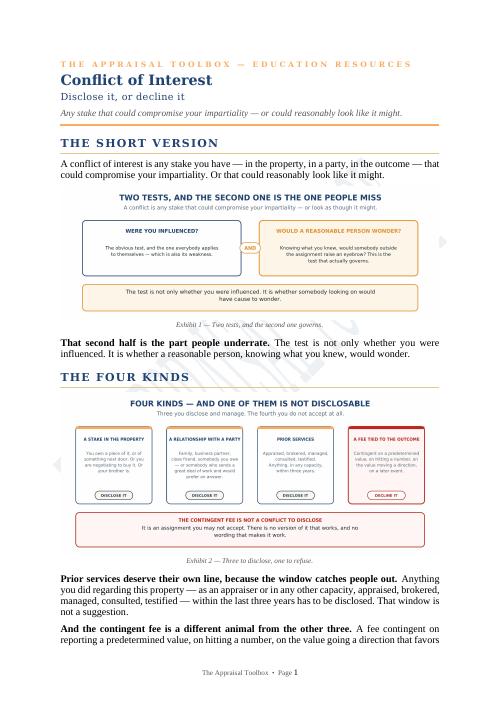
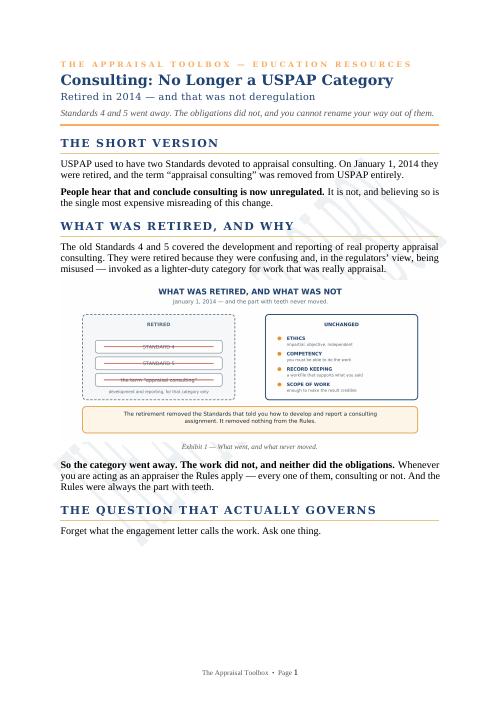
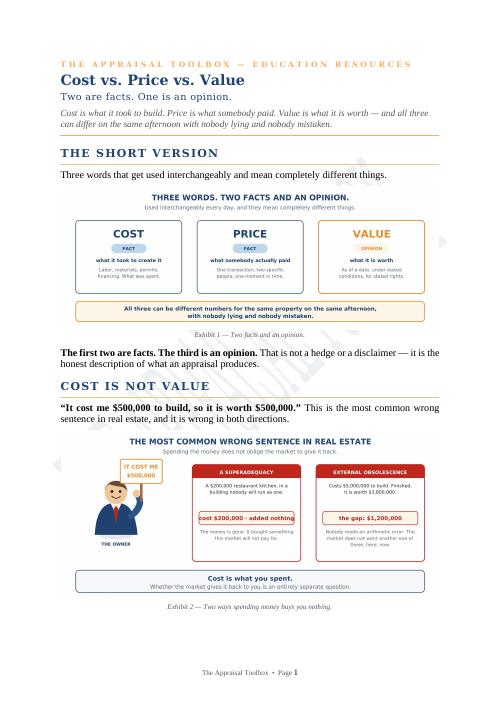
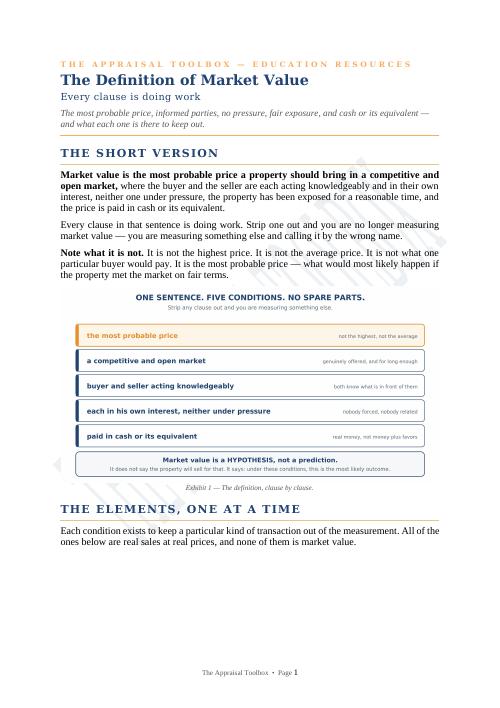
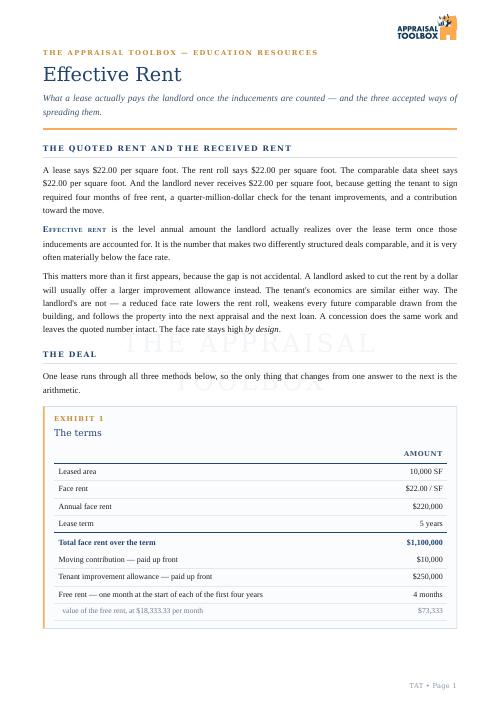
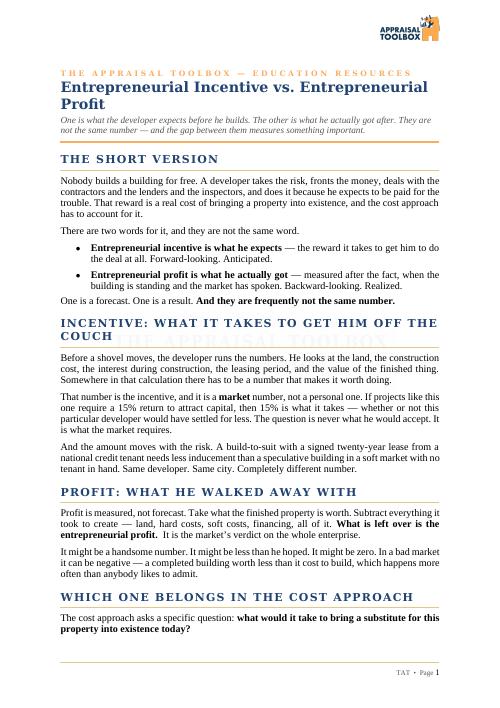
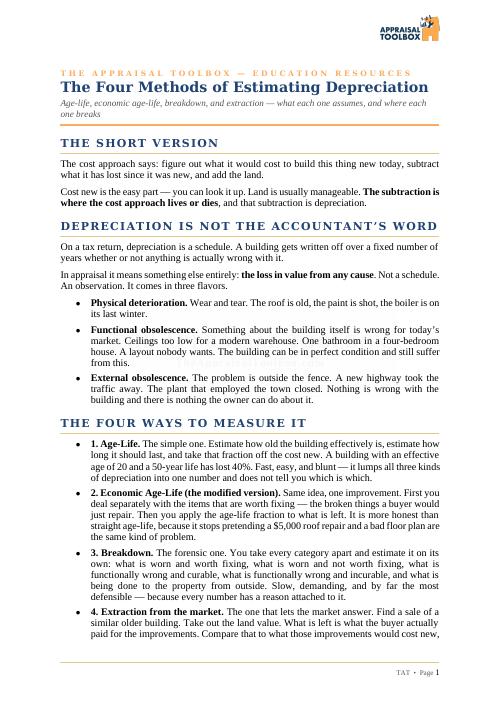
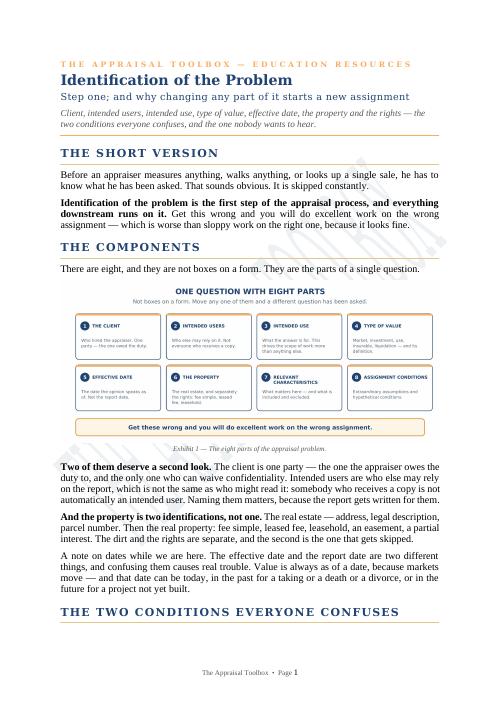
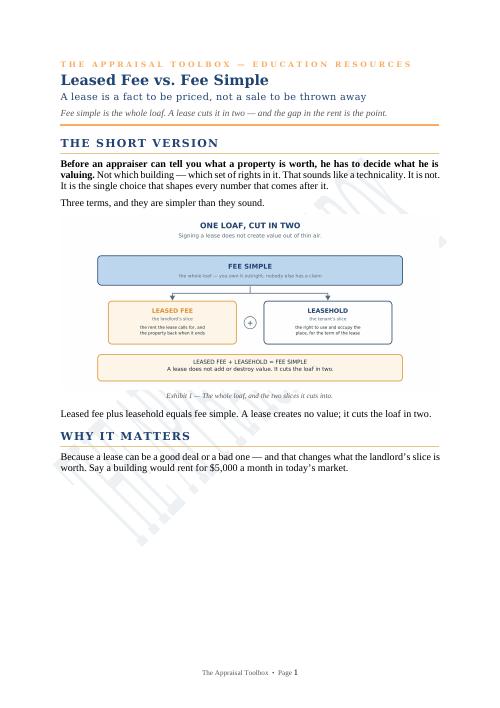
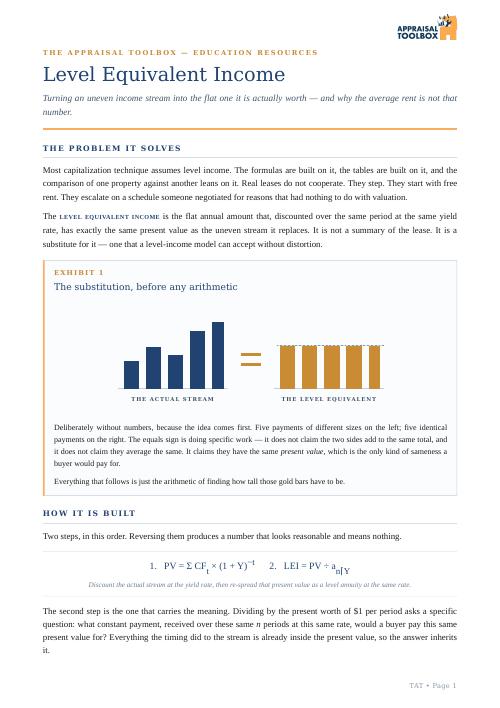
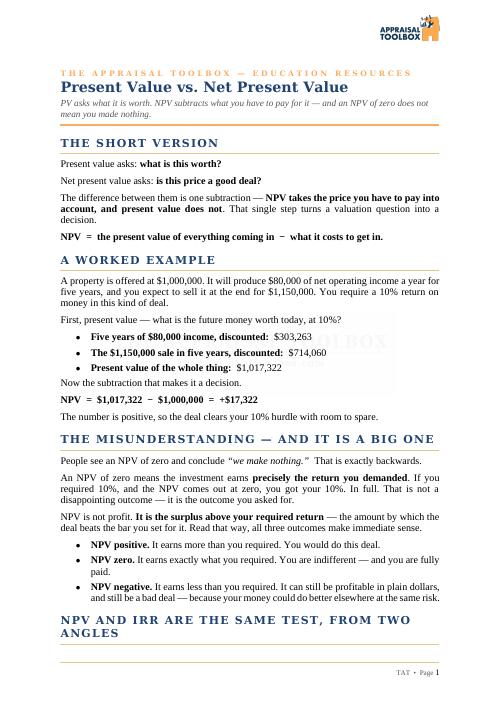
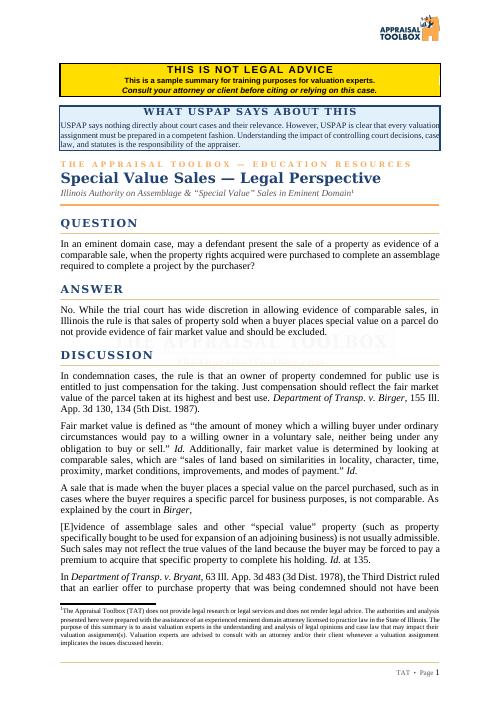
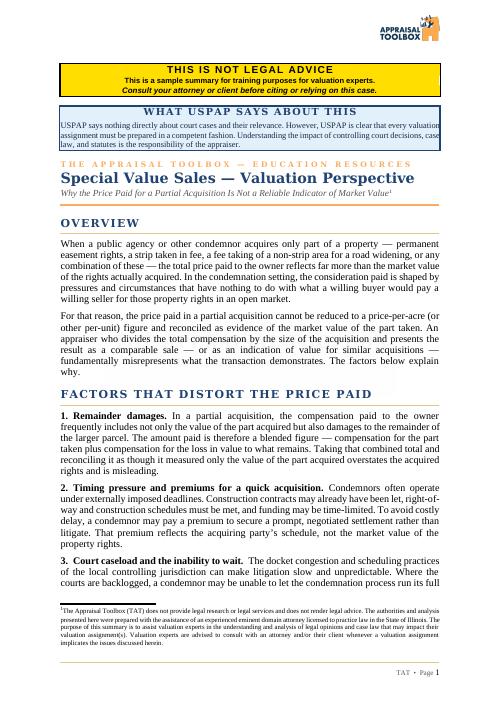
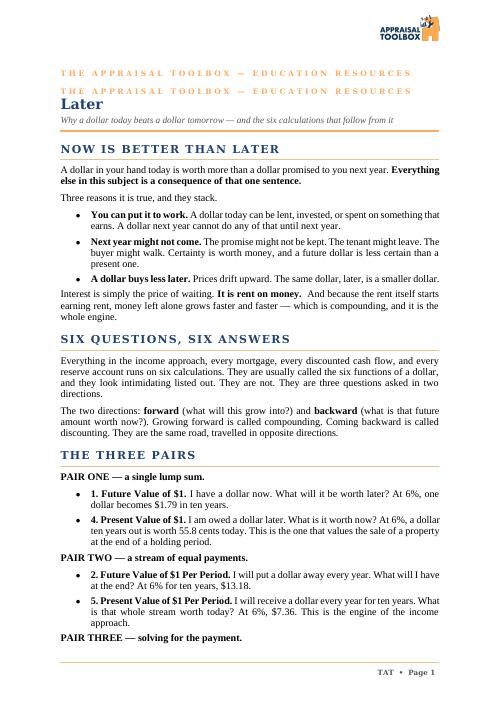

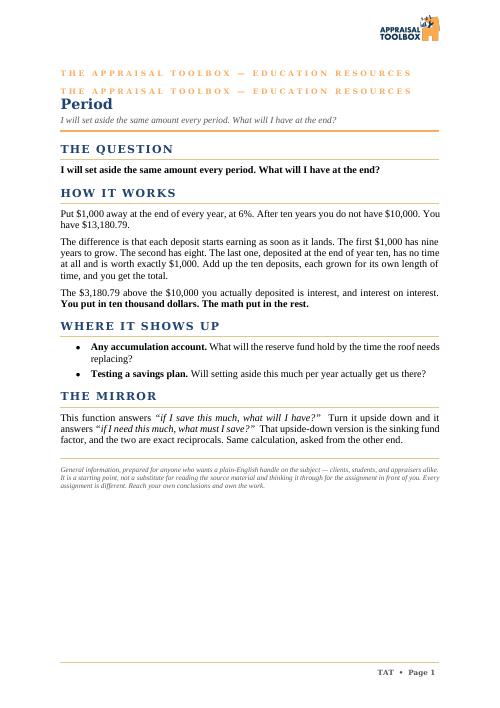
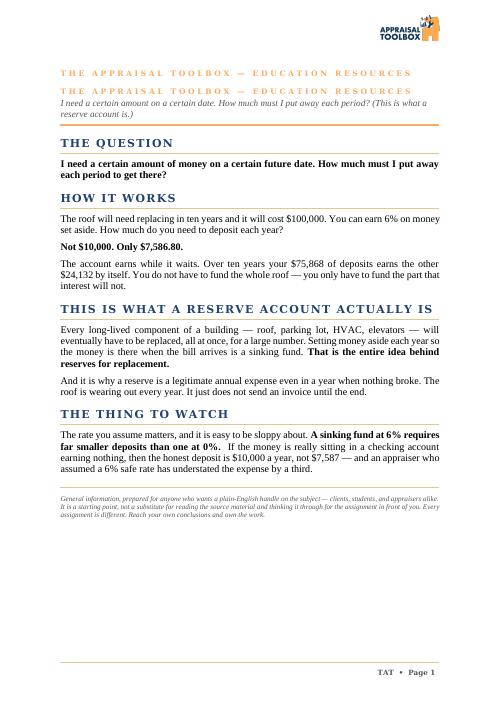
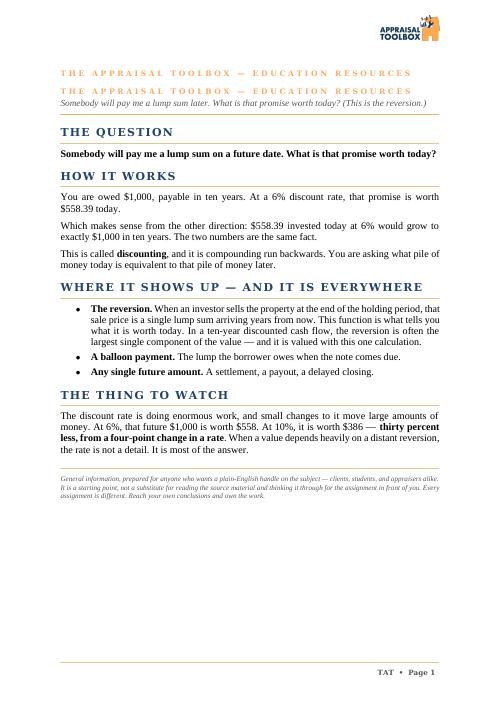
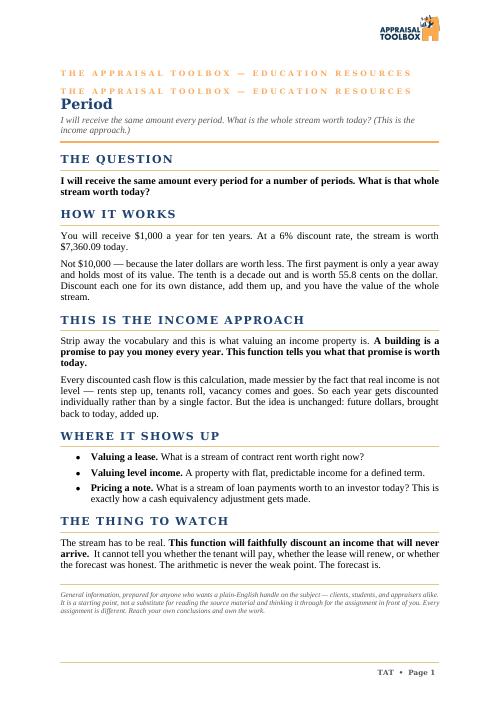
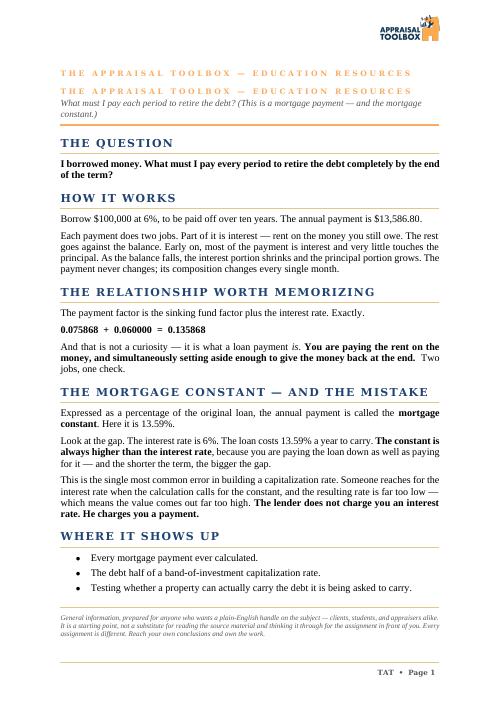
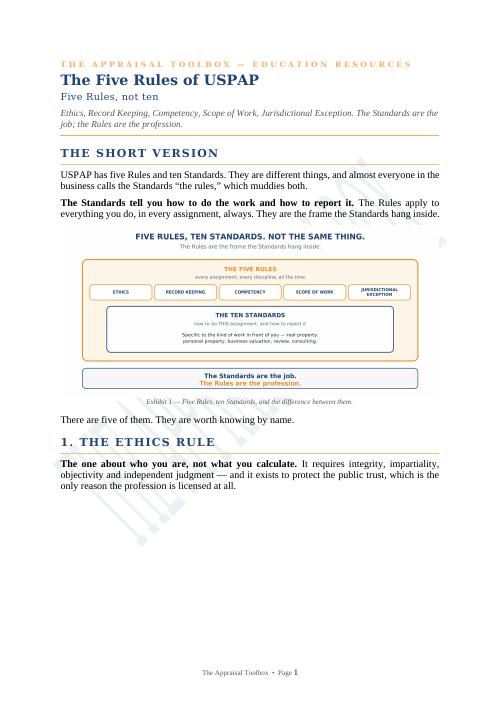
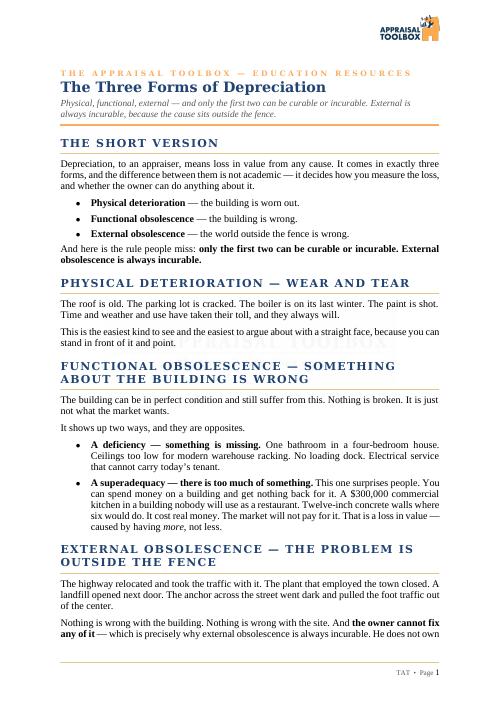
Library papers are not part of any course, and are not provided or approved by any appraisal organization, association, or course provider.
Getting access
The sample problems and the study tools are open to anyone. Course files need a code.
Open to anyone
The six sample problems and the study tools — symbols, math basics, HP-12c help, quizzes. No code, nothing to sign in to.
Course files
The practice files for a course open with a code. Access lasts for the length of the course and stops when it ends.
For more information
Students, instructors and course providers — email the Toolbox. Terms of access and anything else that applies to your situation are sent by reply.
Email TheAppraisalToolbox@gmail.comOne address for everything. All access questions go to TheAppraisalToolbox@gmail.com. If you are in one of my classes, please do not send access questions to my instructor email — they are handled here.